Different views of one design
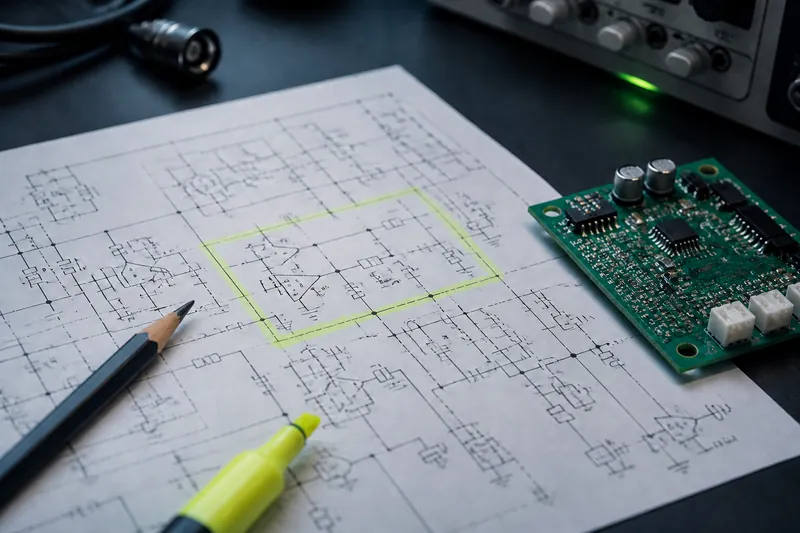
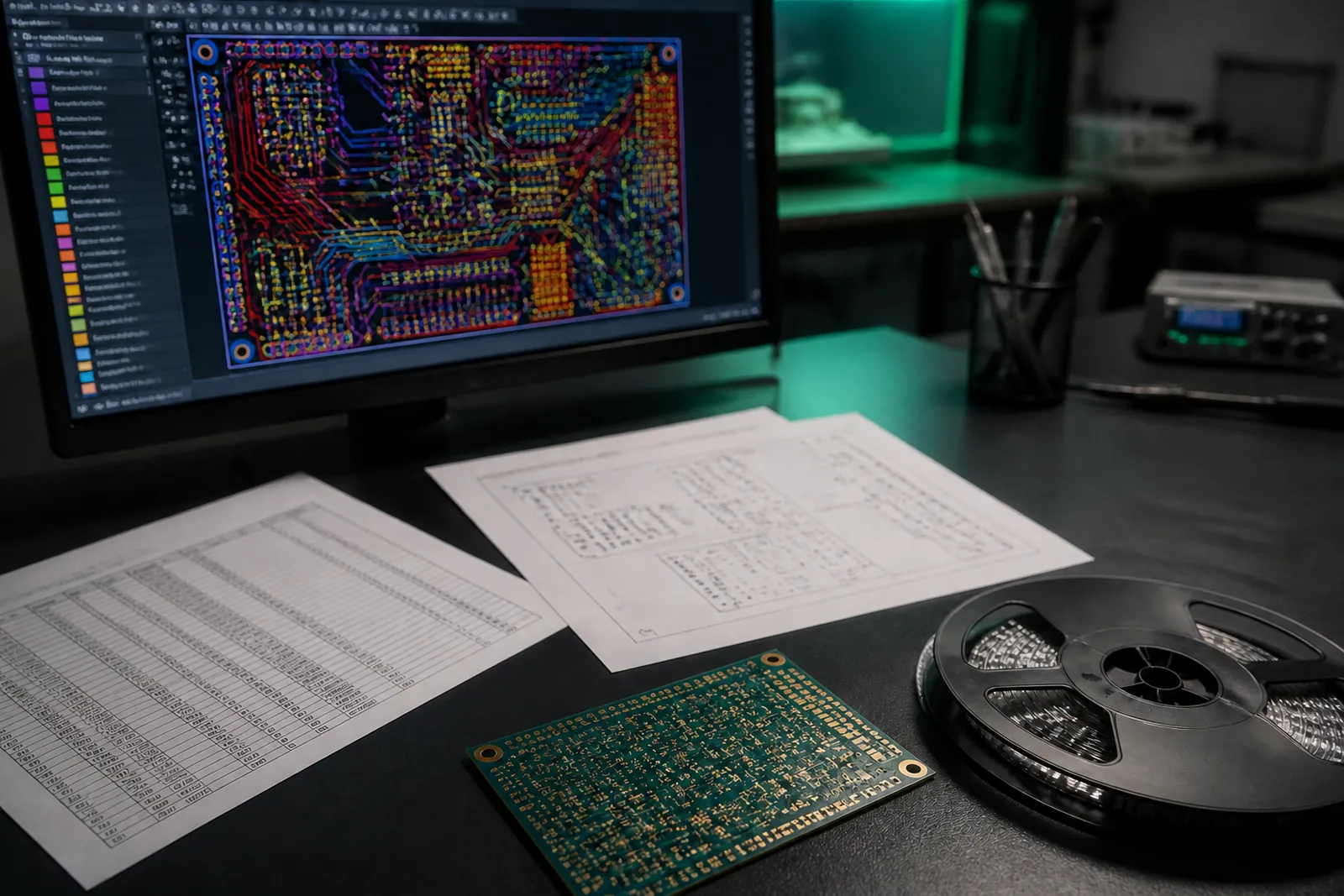
Fabrication, assembly and testing need different information about the same device. Layer data describes board geometry, the parts list identifies what to source and placement data defines where components go. None is a complete device description by itself. Production preparation makes them a coherent instruction set referring to one approved setup.
Consider a sensor controller: copper and drill data can describe its bare board without identifying the exact sensor ordering code. The BOM supplies that identity but may not explain orientation. Operation can also require firmware and test conditions. This is why the expected delivery state should be defined before deciding which files are needed.
A bare-board order needs a different inspection scope from a programmed assembly. Select the package around the requested completion level. A complete, identifiable set of relevant documents is more useful than a large collection of attachments whose relationship the partner must infer.
Gerber, outlines and drill files
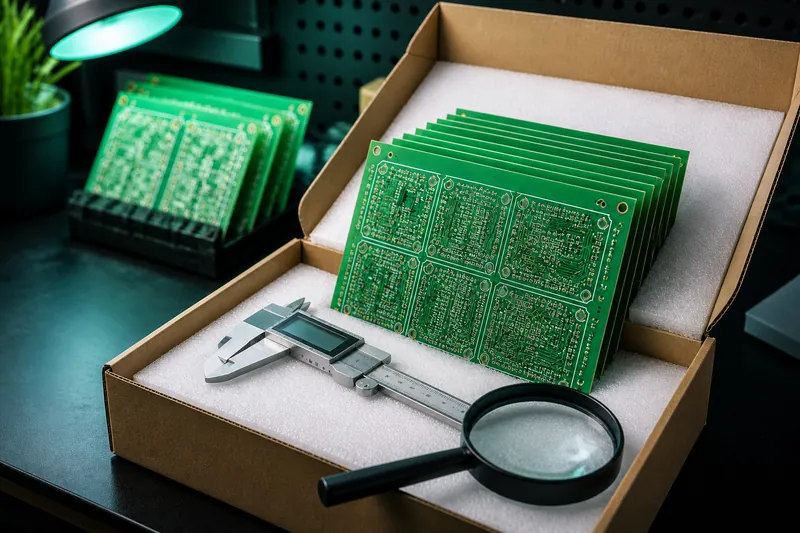
Gerber files communicate geometric content for board layers. Manufacturing also requires a clear outline and drill information. Inspect exports independently: do they contain the expected layers and all necessary features? This checks what has been released, which is different from examining the source design inside its editing environment.
Specifications may cover material, thickness, stackup and surface finish. An organised parameter list lets the partner identify the requested construction. Instructions hidden in filenames or an earlier conversation are a weaker basis than a clear description accompanying the files. Any special requirements should be recorded there too.
Retain the source revision used for export. If the board changes during ordering, release new layer and drill files together. Replacing one old attachment with a file from another design state does not create a controlled package, even if both individual files look plausible when viewed separately.
BOM identity and assembly variants
The bill of materials connects component references with exact devices. Full ordering types and packages matter alongside nominal values. Equal-value components can behave differently in a circuit, so the purchasing list requires engineering approval. The assembly partner needs an unambiguous association between the requested setup and the parts that should be fitted.
Mark unpopulated positions and approved alternatives explicitly. If a board supports several variants, differences should not exist only in an email note. Variant names, parts lists and assembly instructions define the task together. That makes the first build and a later repeat understandable using the same records.
During shortages, review the consequences of substitution. A changed sensor or controller may affect firmware. Documents should show which alternative was accepted and whether further verification is required before that setup is used. Physical fit alone does not establish equivalence in the completed system.
Placement, rotation and assembly drawings
Placement or CPL files contain positions, board sides and rotations. These act as instructions for the assembly partner. Export conventions need agreement because tools may interpret orientation differently. Polarised parts and connectors are useful review points where an apparently small discrepancy can become a significant assembly problem.
Drawings supplement the table with references and special instructions. Separate connections and mechanical requirements cannot always be expressed through placement coordinates. A readable assembly drawing can therefore help even with a board that appears uncomplicated, particularly when the completed unit needs cables or parts fitted after the main assembly process.
Compare references across the relevant files. Intended omissions should be marked; missing data should be resolved. The supplier should not have to guess whether an inconsistent entry represents a deliberate variant or an error in the documentation accompanying the order.
DFM, programming and functional instructions
DFM compares the design with the partner’s process constraints. Review assembly suitability as well as layers and holes. Answers to manufacturing queries should preserve intended operation. A change that looks purely mechanical can affect connectors or mounting and may require design approval before revised files are released.
Programmed hardware also needs corresponding firmware, loading instructions and setup. Tests state connections, functions and acceptance criteria. Sensor response, display and communication can be examined separately, but their interaction still matters to the device’s overall behaviour. The procedure should match the functionality actually ordered.
Manufacturability review does not replace functional testing, and prototype checks do not automatically establish certification. State what each assessment demonstrates. This allows the completion level and remaining work to be explained at delivery without presenting different forms of evidence as if they answered the same question.
Release checklist and the next revision
Before handover, check completeness, matching revisions and readable specifications. Clarify the partner’s responsibility and expected final state. A file list can identify each document’s role and current release. This reduces the chance that work begins from an outdated attachment simply because it remained accessible alongside the approved version.
pcbform prepares manufacturing documentation alongside design and prototype work. Production partners exclusively handle physical fabrication and component assembly. We coordinate sources and exports, address technical questions and check results within the agreed scope. Existing designs begin with a review of the material available and what still needs to be prepared.
The central principle is consistency: geometry, parts, placement and verification should describe the same state. A modification creates a new release. Earlier packages can remain useful for traceability while being clearly distinguished from the setup authorised for the current manufacturing order and its subsequent inspection.